
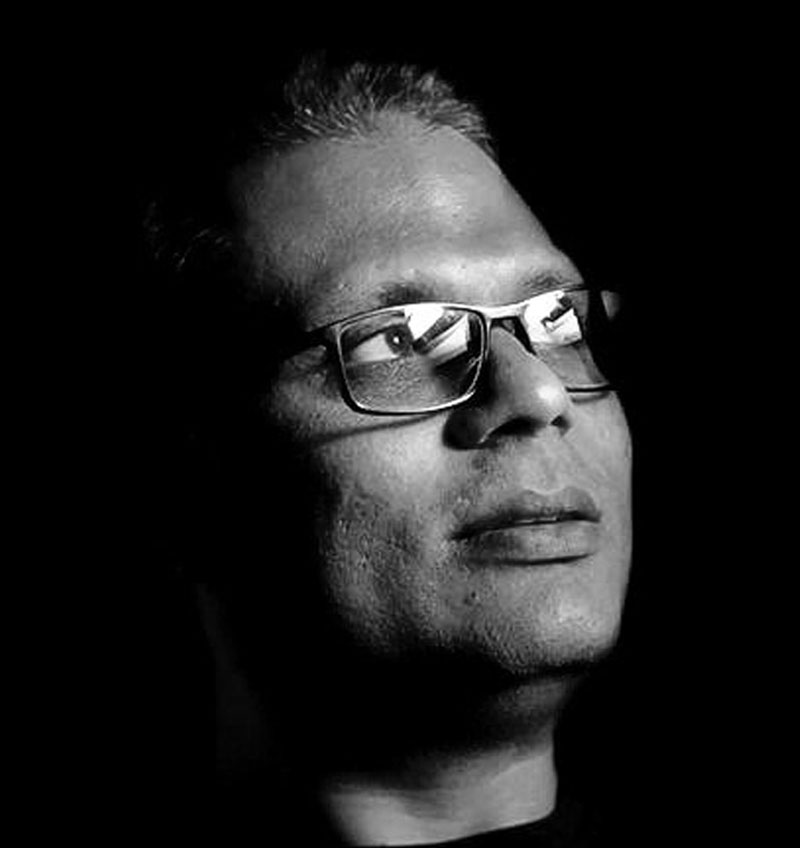
Punj Prakash
Director | Actor | Theatre Practitioner | Writer | Trainer
Punj Prakash is a versatile actor, director, theatre practitioner, writer and trainer. He has been continuously associated with professional theatre since the 1990s. Born on 5 August 1976, Punj Prakash began his theatre journey as a child artist in the play Parivartan. Since then, through his sustained engagement with acting, direction, writing and theatre training, he has established a distinct identity in the field.
He completed his Honours degree in History from Magadh University and subsequently received formal training in Acting at the National School of Drama (NSD), New Delhi, as part of the 2004–07 batch. After completing his training at NSD, he worked as an actor with the NSD Repertory Company from 2007 to 2012. He has gained extensive experience working with several senior directors, theatre practitioners and trainers from across the country.
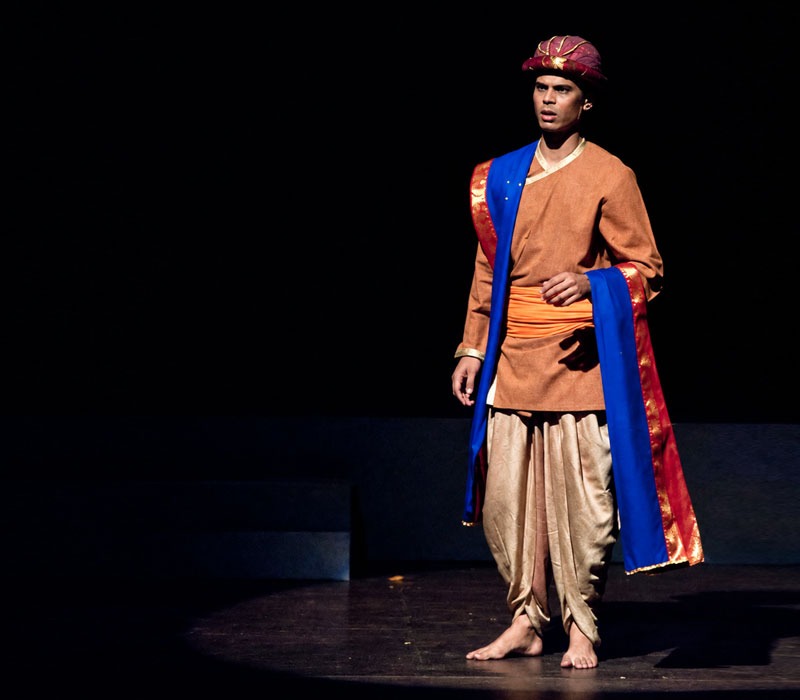

Dastak and Punj Prakash
Punj Prakash is one of the founding members of Dastak, one of Patna’s prominent professional theatre organisations. Established in 2002, Dastak has been an important part of his creative journey. As its Director, he has continuously worked towards developing a theatre process in which tradition, experimentation, training, discipline, rehearsal, performance and different kinds of workshops remain interconnected.
For Dastak, theatre is not merely a medium for presenting performances on stage; it is a means of embracing tradition and experimentation while contributing to the development of the artist’s personality, creative expression, social dialogue and journey towards becoming a professional artist. With this vision, Punj Prakash has placed particular emphasis on training new artists, providing them with opportunities to perform, and developing their independent creative and professional abilities. Dastak has remained an important foundation of his long-term theatre vision and continuous creative experimentation.
For Dastak, theatre is not merely a medium for presenting performances on stage; it is a means of embracing tradition and experimentation while contributing to the development of the artist’s personality, creative expression, social dialogue and journey towards becoming a professional artist. With this vision, Punj Prakash has placed particular emphasis on training new artists, providing them with opportunities to perform, and developing their independent creative and professional abilities. Dastak has remained an important foundation of his long-term theatre vision and continuous creative experimentation.
As a director, Punj Prakash has actively worked to translate literature, social concerns and diverse questions of contemporary life into a theatrical language. His directorial process emphasises the creative relationship between the actor, text, visual language, music, lighting and stage design, along with artistic experience and meaningful entertainment.
For him, direction is not merely the preparation of a theatrical production; it is a process of discovering theatrical language and developing creative possibilities together with the artists, while presenting meaningful entertainment before an audience. He considers an artist’s commitment, social accountability and responsibility, individual sensitivity and creative freedom to be important components of a collective theatre process and social responsibility.
A significant aspect of Punj Prakash’s theatre journey is his continued engagement with acting, practice, theatre training and performance. For a long time, he has worked with new artists and young people entering the field of theatre.
His training methodology, rooted in a movement from tradition towards experimentation, gives equal importance to the mental, physical, intellectual, emotional, personal and creative development of the artist. For him, training is not merely a process of acquiring acting skills; it is also a social process of developing discipline, sensitivity, vision and creative confidence in an artist.
Trained by reputed theatre trainers, teachers, designers, writers, directors and theatre practitioners from India and abroad, Punj Prakash has actively worked across various areas of theatre—including acting, direction, design and conceptualisation, reading and teaching, writing, singing, playing musical instruments, lighting design, makeup, voice and speech, physical training, acting training, theatre workshops and theatre discussions.
His continuous engagement with these diverse aspects of theatre has broadened and enriched his theatrical vision. His creative work reflects a living dialogue between acting, music, lighting, the body, voice, literature, visual design and other artistic mediums, giving his theatrical language a distinctive and rich character.
Punj Prakash currently serves as the Creative Head of House of Variety. Based in Patna, this platform works towards providing a shared space for creative activities related to art, culture, cinema, literature and theatre.
Through House of Variety, he actively works towards developing new possibilities of dialogue among artists, creators and audiences, while promoting serious and professional cultural activities.
Continuity of practice and contemporaneity, with an awareness of the social responsibility and accountability of art, form important foundations of Punj Prakash’s theatre vision. In his view, tradition and experimentation, training and performance, discipline and creative freedom, and art and social sensitivity are deeply interconnected.
A major objective of his theatre journey is to contribute to the creation of sensitive, aware and creatively capable artists and creative communities that remain responsible towards their time, society and art.
He believes in an art that does not become merely a means of acquiring name and money, but instead makes a meaningful contribution towards making human beings and society more compassionate, creative, sensitive and humane.
With experience of acting in more than 50 theatrical productions across classical, modern, contemporary and experimental theatre, Punj Prakash has worked in diverse theatrical traditions and styles, ranging from Indian literature and traditional theatre to Western classical dramatic literature and contemporary experimental theatrical language.
Some of his notable performances include:
- Parivartan — Writer and Director: Arjun Prasad Singh
- Janata Pagal Ho Gayi Hai — Writer: Shivram; Director: Anil Ojha; Group: Abhivyakti, Patna
- Deemak — Writer and Director: Anil Ojha; Group: Abhivyakti, Patna
- Shiksha Ka Circus — Writer and Director: Anil Ojha; Group: Abhivyakti, Patna
- Leela Nandlal Ki — Story: Bhisham Sahni; Director: Vijay Kumar; Group: Manch, Patna
- Baniya Bahu — Novel: Mahasweta Devi; Director: Mrityunjay Kumar; Group: Manch, Patna
- Azad Hind Radio Se — Based on the speeches of Subhas Chandra Bose; Director: Vijay Kumar; Group: Manch, Patna
- Tiriya Charitar — Story: Shivmurti; Director: Ashish Kumar Mishra; Group: Rang Karm, Patna
- Muktadhara — Playwright: Rabindranath Tagore; Director: Satish Anand; Group: Kala Sangam, Patna
- Andher Nagari — Playwright: Bharatendu Harishchandra; Director: Rajesh Sinha
- Maranoparant — Playwright: Surendra Verma; Director: Punj Prakash; Group: Theatre Unit, Patna
- Dedh Inch Upar — Playwright: Nirmal Verma; Director: Rajiv Ranjan Srivastava; Group: Theatre Unit, Patna
- Kissa Thalha Ram Ka — Playwright: Rajesh Gondwale; Director: Vijay Kumar; Group: Manch, Patna
- Aman Ka Raag — Poetry collage; Director: Asif Ali; Group: IPTA, Patna
- Sura So Pahchaniye Jo Laade Deen Ke Het — Based on the writings of Shaheed Bhagat Singh; Director: Ishtiaq Khan; Group: BIPTA, Patna
- Renu Ke Rang — A well-known musical theatrical production based on three stories by Phanishwar Nath ‘Renu’: Na Jaane Kehi Vesh Mein, Panchlight and Raspriya; Director: Vijay Kumar; Group: Manch, Patna
- Fukkan Ka Suthanna — Playwright: Rabindra Bharti; Director: Aniruddha Pathak; Group: Theatre Unit, Patna
- Heeralal Ka Bhoot — Story: Uday Prakash; Director: Aniruddha Pathak; Group: Theatre Unit, Patna
- Bade Bhai Sahab — Story: Premchand; Director: Punj Prakash
- Gulabchhari — Maithili play; Playwright: Arbind Akku; Director: Vineet Jha; Group: Chetna Samiti
- Hum Pagal Ya Ve Pagal
- Kal Kothari — Playwright: Swadesh Deepak; Director: Shashi Bhushan Verma; Group: Manch, Patna
- Nagin Tera Vansh Badhe — Story: Vijaydan Detha; Director: Raju Mishra
- Raag Darbari — Novel: Shrilal Shukla; Director: Vijay Kumar; Group: Manch, Patna
- Bidesia — Writer: Bhikhari Thakur; Director: Sanjay Upadhyay; Group: Nirman Kala Manch, Patna
- Jeevan Leela — Based on traditional songs and music; Director: Sanjay Upadhyay
- Kahan Gaye More Ugana — Writer: Usha Kiran Khan; Director: Sanjay Upadhyay; Group: Nirman Kala Manch, Patna
- Crime and Punishment — Novel: Fyodor Dostoevsky; Director: Dinesh Khanna; National School of Drama, New Delhi
- Hori — Writer: Premchand; Director: M. K. Raina; National School of Drama, New Delhi
- Malavikagnimitram — Writer: Kalidasa; Director: K. S. Rajendran; National School of Drama, New Delhi
- Yahudi Ki Ladki — Playwright: Agha Hashr Kashmiri; Director: Hema Singh; National School of Drama, New Delhi
- Katha Mikki Chakubaz Ki — Playwright: Bertolt Brecht; Director: Robin Das; National School of Drama, New Delhi
- Romeo and Juliet — Playwright: William Shakespeare; Director: Rob Clare; National School of Drama, New Delhi
- Taj Mahal — Writer: Shama Fatehali; Director: Abhilash Pillai; National School of Drama, New Delhi
- Aunties Ka Tehkhana — Playwright: Joseph Kesselring; Director: Ranjit Kapoor; National School of Drama, New Delhi
- Pahiye — Story: Salim Al Deen; Director: Jameel Ahmed; National School of Drama, New Delhi
- Candida — Playwright: George Bernard Shaw; Director: Raj Bisaria; National School of Drama, New Delhi
- Roobroo — Based on Ingmar Bergman’s film Persona; Director: Kaushik Sen; National School of Drama Repertory
- 1857 Ki Kranti — Director: Nadira Zaheer Babbar; National School of Drama Repertory
- Ghashiram Kotwal — Playwright: Vijay Tendulkar; Director: Rajendra Nath; National School of Drama Repertory
- Othello — Playwright: William Shakespeare; Director: Raj Bisaria; National School of Drama Repertory
- Acharya Tartuffe — Playwright: Molière; Director: Prasanna; National School of Drama Repertory
- Doobi Ladki — Story: Gogol; Director: Bhanu Bharti; National School of Drama Repertory
- Jati Hi Poochho Sadhu Ki — Playwright: Vijay Tendulkar; Director: Rajendra Nath; National School of Drama Repertory
- Banabhatta Ki Atmakatha — Novel: Hazari Prasad Dwivedi; Director: M. K. Raina; National School of Drama Repertory
- Ram Naam Satya Hai — Playwright: Chandrashekhar Phalsadkar; Director: Chetan Dattatr; National School of Drama Repertory
- Main Istanbul Hoon — Based on the novels of Orhan Pamuk; Playwright and Director: Mohan Maharishi; National School of Drama Repertory
- Comrade Kumbhakarna — Playwright: Ramu Ramanathan; Director: Mohit Takalkar; National School of Drama Repertory
- Hamara Shehar Us Baras — Novel: Geetanjali Shree; Director: Kirti Jain; National School of Drama Repertory
- Begum Ka Takiya — Novel: Anant Kumar; Director: Ranjit Kapoor; National School of Drama Repertory
- Blood Wedding — Playwright: Federico García Lorca; Director: Neelam Mansingh Chowdhry; National School of Drama Repertory
- Natmethiya — Playwright: Punj Prakash; Director: Randhir Kumar; Group: Raag, Patna
- Shayar Shutter Down — Playwright: Rajesh Chandra; Director: Randhir Kumar; Group: Raag, Patna
- Jati Hi Poochho Sadhu Ki — Playwright: Vijay Tendulkar; Director: Punj Prakash; Group: Dastak, Patna
Punj Prakash has extensive experience directing traditional, literary, social, contemporary and experimental theatre. He has directed numerous productions based on acclaimed literary works as well as original theatrical narratives.
Major Directed Productions
- Khel Tamasha — Street play
- Shiksha Ka Circus — Street play written by Anil Ojha
- Maranoparant — Famous one-act play by playwright Surendra Verma
- Dadar Pul Ke Bachche — Based on the novel by Krishna Chander, 2001
- Ek Aur Durghatna — Hindi translation by Amitabh Srivastava of Accidental Death of an Anarchist, the famous political satire by Nobel Prize-winning Italian playwright Dario Fo — 2003 and 2004
- Ek Tha Gadha — Popular satirical play by Sharad Joshi
- Bade Bhai Sahab — Stage adaptation of Premchand’s famous story
- Andher Nagari — Famous play by Bharatendu Harishchandra
- Ye Aadmi, Ye Chuhe — Hindi adaptation of the famous American writer John Steinbeck’s celebrated novel Of Mice and Men
- Leela Nandlal Ki — Stage adaptation of a story by Bhisham Sahni
- Ram Sajivan Ki Premkatha — Stage adaptation of a story by Uday Prakash, 2004
- Paul Gomra Ka Scooter — Stage adaptation of a story by Uday Prakash
- Charandas Chor — A representative play by renowned theatre practitioner and playwright Habib Tanvir
- Jo Raat Humne Guzari Marke — Based on three famous stories by Saadat Hasan Manto
- The Trial of Dedan Kimathi — A celebrated political play written by Kenyan writers Ngũgĩ wa Thiong’o and Ngũgĩ wa Mĩriĩ. The play centres on Kenya’s struggle for independence and rebellion against British colonial rule, raising questions of freedom, resistance and people’s struggles. Its central character, Dedan Kimathi, is based on the historical leader of the Kenyan independence movement.
- Mere Sapne Wapas Karo — Stage adaptation of Sanjay Kundan’s story; first staged in 2002
- Gujarat — A theatrical presentation of poems by contemporary poets based on the Gujarat violence; first staged on 10 April 2003
- Don Quixote — Theatrical adaptation based on Miguel de Cervantes’ world-famous satirical novel; first staged on 19 January 2004
- Ram Sajivan Ki Premkatha — Stage adaptation of Uday Prakash’s famous story; first staged on 2 March 2004
- Ek Ladki Paanch Deewane — Theatrical adaptation based on the satirical work of Harishankar Parsai; staged in 2004 and 2016
- Fandi — Play written by Shankar Shesh; 2005
- Paul Gomra Ka Scooter — Stage adaptation of Uday Prakash’s acclaimed story; 2006
- Patkatha — Solo theatrical presentation based on the famous poem by poet Dhoomil; first staged on 16 January 2016
- Gandhi in a General Compartment — Essay by Dinesh Chaudhary, First Staged on 4 February 2016
- Bhukh — Punj Prakash’s first original play based on a true incident; first staged on 18 January 2017
- Kirayedar — Theatrical adaptation of a story by Fyodor Dostoevsky; first staged on 25 January 2017
- Jati Hi Poochho Sadhu Ki — Play written by acclaimed Marathi playwright Vijay Tendulkar; first staged on 21 September 2017
- Ek Tha Gadha — Famous satirical play by Sharad Joshi; staged in 2018
- Ashadh Ka Ek Din — Representative play by acclaimed Hindi playwright Mohan Rakesh; first staged on 6 April 2019
- Jamun Ka Ped — Theatrical adaptation in clowning style based on Krishna Chander’s famous story; first staged on 2 February 2020
- Palayan — A satirical and musical play written by Punj Prakash, based on the Corona period; first staged on 10 July 2022
- Nithalle Ki Diary — Theatrical presentation based on Harishankar Parsai’s satire; first staged on 9 June 2023
- Teesri Kasam urf Maare Gaye Gulfam — Theatrical adaptation of Phanishwar Nath ‘Renu’s story; first staged in January 2024
- Panchlight — Theatrical adaptation of Phanishwar Nath ‘Renu’s famous story; first staged on 26 April 2024
- Chand Tanha Aasman Tanha — A solo play based on the life and creative work of noted actress and poet Meena Kumar; first staged on 28 June 2024
- Katha Kahani — Stage adaptation of three stories by Premchand; first staged in July 2024
- Seedhiyan Kabhi Khatm Nahin Hoti — Presentation of representative poems by poet Naresh Saxena; first staged on 5 December 2024
- Taj Mahal Ka Tender — Popular satirical play written by Ajay Shukla; first staged on 24 August 2024
- Raag Darbari — Theatrical adaptation of Shrilal Shukla’s acclaimed novel; first staged on 6 July 2025
- Andhayug — Famous Hindi play by Dharamvir Bharati; first staged on 6 December 2025
- Surgery — Stage adaptation of a story by Anton Chekhov; first staged on 3 September 2026
His directorial vision continually expands from the roots of folk and traditional theatrical traditions towards modern, contemporary and experimental theatrical languages. Rather than restricting a subject to its traditional meaning, he places it in the context of the present time, social reality and human sensitivities, giving it new meanings and perspectives.
His productions demonstrate a creative synthesis of social concerns and contemporary consciousness with theatrical form, visual language, acting and experimentation. This dialogue between tradition and modernity gives his productions a distinctive aesthetic, intellectual depth and a strong theatrical identity developed through rigorous practice.
In addition to acting and direction, Punj Prakash has contributed to theatre through lighting design, visual and costume aesthetics, and music direction. His theatrical vision focuses on the overall form of a production, in which visual language, sound, stage space and acting come together to create a theatrical experience. Music emerges as an essential component of his productions.
He has conducted theatre workshops and training programmes in various villages, towns and cities, including Virpur and Pandarak in Bihar; New Delhi; Dongargarh and Raipur in Chhattisgarh; and Azamgarh in Uttar Pradesh.
He has also conducted training programmes for the Sangeet Natak Akademi and NTPC, working with participants from diverse social and cultural backgrounds.
He has conducted workshops and directed plays for Satyawati College, University of Delhi; served as a guest examiner for the Theatre Department of Visva-Bharati, Santiniketan; conducted workshops for the National School of Drama; and worked as a guest trainer at Mandi School of Drama, Shri Ram Centre and Sangeet Natak Akademi, New Delhi.
Acting and dialect coaching in Bindia Ke Bahubali.
Literary Adaptations
Punj Prakash has adapted several acclaimed literary works for the stage, including:
- Dadar Pul Ke Bachche — Stage adaptation of the novel by Krishna Chander.
- Baniya Bahu — Stage adaptation of the novel by Mahasweta Devi.
- Parti Parikatha — Stage adaptation of the novel by Phanishwar Nath Renu.
- Teesri Kasam urf Maare Gaye Gulfam — Stage adaptation of the story by Phanishwar Nath Renu.
- Panchlight — Stage adaptation of the famous story by Phanishwar Nath Renu.
- Nithalle Ki Diary — Stage adaptation of the satirical novel by Harishankar Parsai.
- Jamun Ka Ped — Stage adaptation of the story by Krishna Chander.
- Do Kashti Ek Sawar — Hindi adaptation of Italian playwright Carlo Goldoni’s comedy The Servant of Two Masters, written in 1746.
- Romeo Juliet Aur Andhera — Stage adaptation of the highly moving novel by Jan Otčenášek, translated into Hindi by the eminent storyteller Nirmal Verma.
- Oleanna — Hindi translation/adaptation of the much-discussed and controversial 1992 play written by renowned American playwright David Mamet.
His literary adaptations demonstrate a distinctive theatrical language in which narrative, characters and social contexts are transformed in accordance with the requirements of stage performance.
- Window — A thought-provoking three-act play with three characters, centred on the rise, decline and disintegration of the progressive movement in the country. The play directly confronts questions of theory and practice, violence and non-violence.
- Bhukh — A sensitive and thought-provoking play based on a true incident, exploring the different forms of hunger in human life. Going beyond physical hunger, the play also highlights the hunger for dignity, rights, love and a better life. Against the backdrop of social inequality and human helplessness, it raises the question of what choices remain before a person when hunger crosses all limits.
- Palayan — A contemporary play that explores the compulsion to move away from one’s home, soil and identity, and the socio-economic reasons behind such displacement. It examines the struggles and loneliness of migrants, their search for a better life, and the relationships and changing sensitivities that are affected in the process. At the same time, it raises the question of why people are forced to leave their homes and who ultimately pays the price of migration.
- Chand Tanha Aasman Tanha — A sensitive play based on the life and creative journey of acclaimed actress Meena Kumari. It explores the silences within relationships, loneliness and the inner conflicts of human beings. Through characters caught between love, memory and incompleteness, the play raises the question of whether a person can remain lonely even while being with someone. Through its dialogues and emotional situations, it reveals layers of human relationships that we often leave unspoken.
Punj Prakash has continued to write on theatre, cinema and social issues, and his articles have been published in several reputed newspapers and magazines across the country. His stories and poems have also been published. His writing reflects a sustained engagement with theatre, cinema, literature and contemporary social concerns.
Journey & Recognition
Professional Profile
Professional Associations
Leadership
Founder Member & Director
Dastak, Patna
Creative
Creative Head
House of Variety, Patna
Theatre
Actor
NSD Repertory Company
2007 – 2012Education
Specialisation in Acting
National School of Drama, New Delhi
2004 – 2007
Honours & Awards
Award
Bhikhari Thakur Award
Patna Book Fair
2003Honour
Arun Singh Memorial Honour
Patliputra Theatre Festival
2016Award
Rang Parsai Award
Vivechana Rangmandal, Jabalpur, Madhya Pradesh
2026